

If you have been searching for smart thermostat installation near you and wondering whether to grab a screwdriver or pick up the phone, you are not alone. Homeowners across the country are wrestling with the same question: can a DIY install actually save money, or will it backfire and cost double in repairs? The glossy marketing from smart home brands makes it look as simple as swapping a light switch. The reality, especially in older homes with tricky wiring, is far more complicated. This guide breaks down every hidden fee, every common mistake, and the real math behind hiring a professional home automation installer versus doing it yourself.
Key Takeaways
- Professional smart thermostat installation in 2026 typically ranges from $200 to $500, with most homeowners paying around $225 to $450 when all hidden fees are included.
- The six most common DIY mistakes can fry your HVAC control board, misroute your wiring, or cause your thermostat to fail within days, often leading to emergency service calls that erase any upfront savings.
- A correctly installed smart thermostat with proper smart HVAC control can save 10 to 23 percent on annual heating and cooling bills, recouping the labor investment within one to two years.
- What’s the Real Cost of a Smart Thermostat Installation in 2026? (Breaking Down the $200–$500 Range)
- The Top 6 DIY Installation Mistakes That Cost Homeowners More Than Hiring a Pro
- Labor Costs vs. Long-Term Energy Savings: Why Most Competitors Leave You in the Dark
- Final Verdict: Should You DIY or Hire a Pro for Smart Thermostat Installation?
- Frequently Asked Questions About Smart Thermostat Installation
What’s the Real Cost of a Smart Thermostat Installation in 2026? (Breaking Down the $200–$500 Range)
Most online guides still quote $85 to $300 for a basic thermostat replacement. Those numbers apply to simple programmable units, not the smart models most homeowners actually want. Smart thermostats introduce a different cost structure entirely. The device itself ranges from $70 to $280 depending on whether you choose a budget model like the Amazon Smart Thermostat or a premium unit like the Ecobee Smart Thermostat Premium or Nest Learning Thermostat 4th Gen. That much is straightforward. What catches people off guard are the extras.
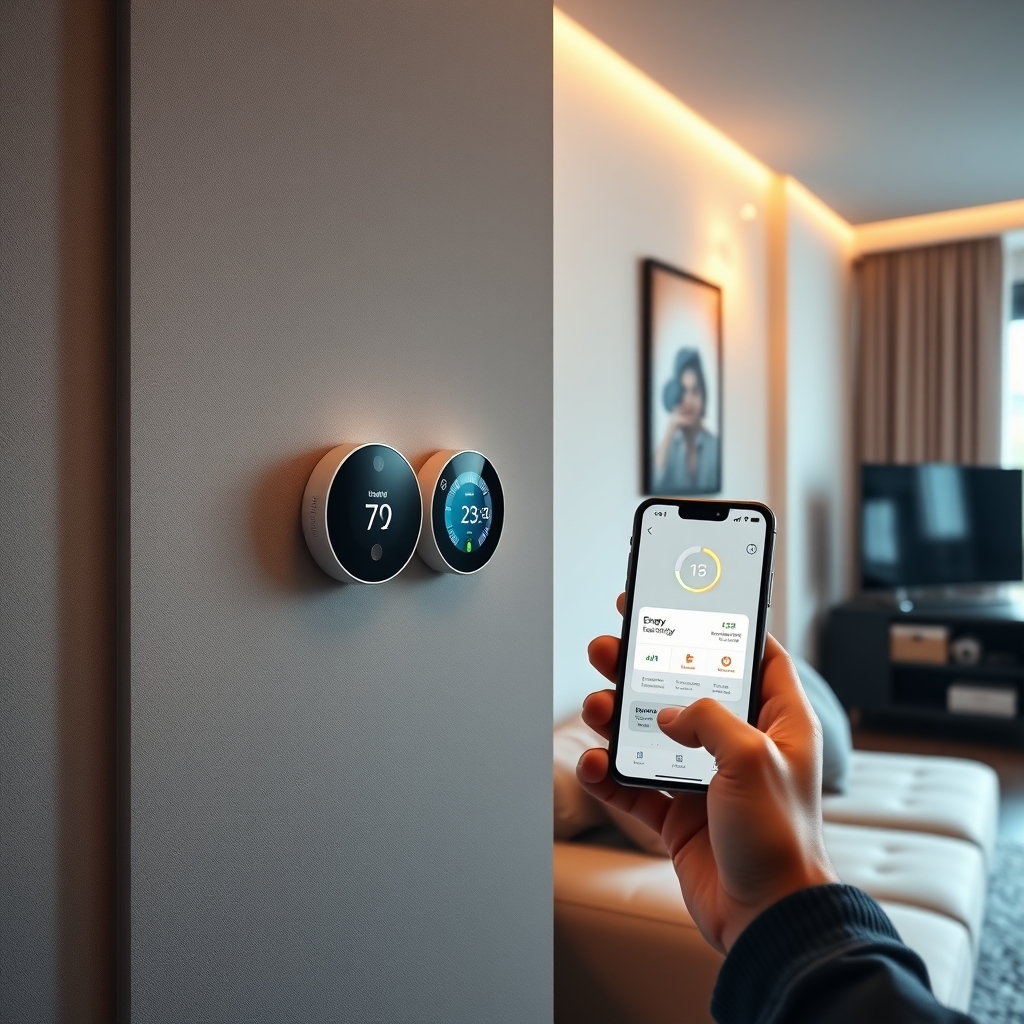
Labor remains the biggest variable. A qualified home automation installer or HVAC technician typically charges $80 to $100 per hour for rewiring work. Most smart thermostat jobs take one and a half to three hours. That puts labor alone between $130 and $220 for a straightforward replacement. If your home lacks a dedicated C wire, which is common in houses built before 2000, you will need a C wire power extender kit or adapter. Those kits run $50 to $100 installed. Many pros also charge an on site assessment fee of $75 to $300 just to confirm compatibility before touching a single wire. Travel and disposal charges add another $20 to $50. All in, the typical smart thermostat installation cost in 2026 lands between $200 and $500, with most homeowners paying $225 to $450.
Some installations climb higher. If you have a zoned system, a heat pump with auxiliary heating, or a home that needs a new wire run from the HVAC unit to the thermostat location, expect the bill to push past $500. The national average range for thermostat installation now reflects these complexities. This is not a bait and switch scenario. It is the genuine cost of integrating modern smart home technology with aging residential infrastructure. When you compare this to other home upgrades like a micro renovation or swapping out LVP flooring, the thermostat investment is relatively modest but the technical stakes are higher.
The Top 6 DIY Installation Mistakes That Cost Homeowners More Than Hiring a Pro
Walk through any home improvement forum and you will find homeowners who saved $200 on labor only to spend $600 on an emergency HVAC repair two weeks later. The pattern repeats so often that local HVAC companies keep technicians on standby specifically for botched DIY smart thermostat installs. Here are the six mistakes that keep generating those service calls.
1. Missing or incorrectly connecting the C wire. This is the number one issue by a wide margin. Older homes often lack a continuous power wire, and without it the thermostat can lose power mid cycle, behave erratically, or fail to boot at all. A professional installer either runs a new C wire or uses a reliable power extender kit with a multimeter check to verify stable voltage.
2. Miswiring the fan, heat, and cool terminals. Thermostat backplates have labeled terminals like Rc, Rh, W, Y, G, and C. Swapping any two of these can send 24 volts to the wrong component and damage the HVAC control board. A replacement control board costs $150 to $400 before labor. Pros reterminate every wire, photograph the original configuration, and test continuity before powering on.
3. Installing the thermostat in a bad location. Mounting the unit on a wall that gets direct afternoon sun, sits near a drafty window, or faces a bathroom with high humidity skews temperature readings. The thermostat thinks the house is warmer or cooler than it actually is and runs the system unnecessarily. Professional installers relocate the thermostat to an interior wall away from heat sources, supply vents, and exterior doors.
4. Forgetting to cut power before working. This sounds basic but happens constantly. A homeowner pulls the old thermostat off the wall without flipping the breaker and the exposed wires short against each other or the metal backplate. The resulting arc can fry the transformer or the control board instantly. The cost of that single mistake exceeds the entire professional installation fee.
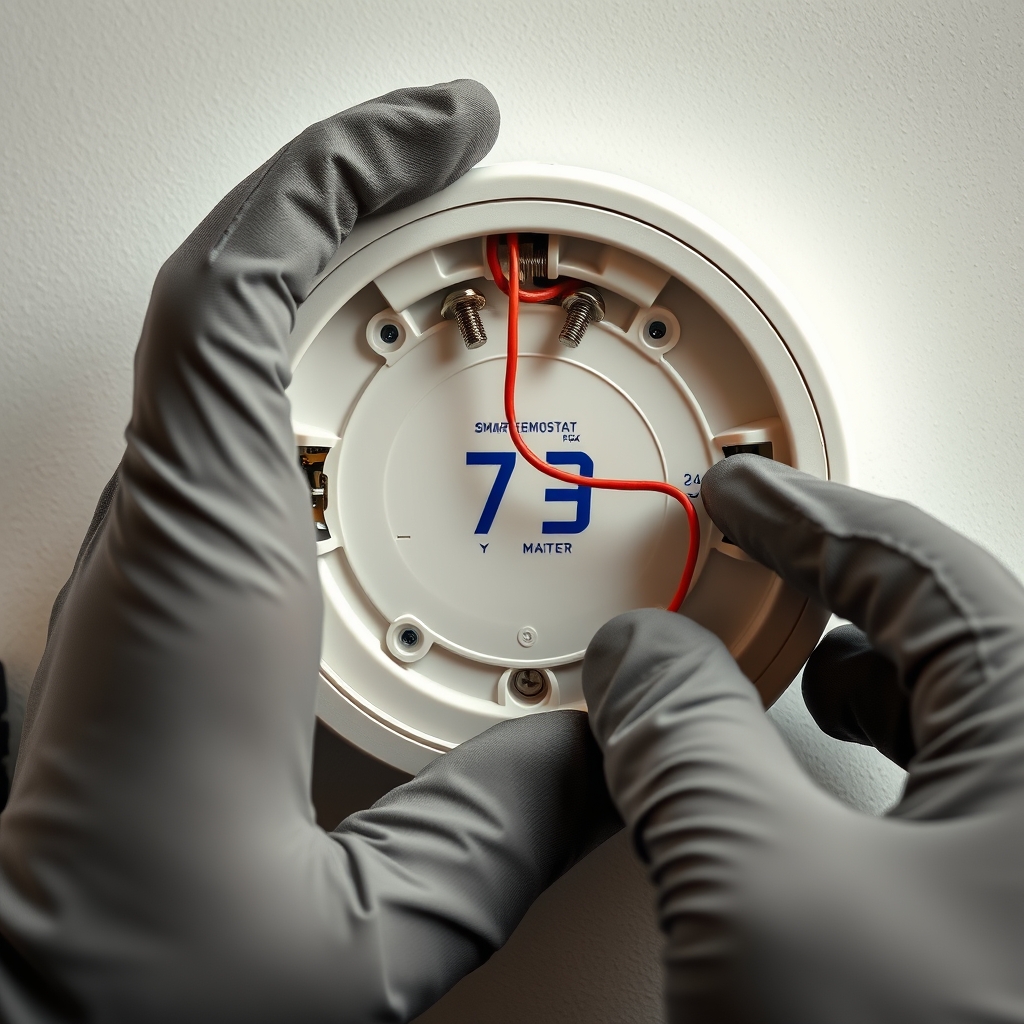
5. Skipping Wi Fi setup, geofencing, and firmware updates. A smart thermostat is only smart if it is configured correctly. Many DIY users mount the device, get basic heating and cooling working, and never enable the scheduling, geofencing, or energy saving features. Even fewer check for firmware updates that patch bugs and improve compatibility. A professional smart home setup service handles the full network configuration including router band steering issues that can disconnect the thermostat from your phone.
6. Not calibrating or pairing auxiliary sensors. Premium models like the Ecobee Smart Thermostat Premium ship with external room sensors. If those sensors are not placed correctly or never paired, the thermostat defaults to a single point reading and loses its multi room optimization capability. Professional installers test each sensor, confirm placement in high traffic rooms, and verify that the thermostat is averaging readings properly.
When you search for “install smart thermostat near me” and see multiple listings, the quotes you receive will vary based on whether the provider is a licensed HVAC technician or a general handyman. The handyman might charge less per hour but may lack the diagnostic tools or insurance to handle complications. This matters especially in condos and older single family homes where wiring is unpredictable. Much like a peel and stick backsplash can look great until moisture gets behind it, a DIY thermostat install can work perfectly until the first cold snap stresses the system.
Labor Costs vs. Long-Term Energy Savings: Why Most Competitors Leave You in the Dark
Here is where the big smart home brands lose transparency. Companies like ADT, Vivint, and Elan aggressively market HVAC control solutions as part of broader home automation bundles. Their sales pitches focus on hardware packages and monthly monitoring subscriptions. What they rarely show is a clear comparison of upfront labor investment against projected energy savings. Consumers walk away with a $1,500 contract, a shiny touchscreen, and no idea when or if the system will actually pay for itself.
A properly installed smart thermostat with genuine smart HVAC control can reduce heating and cooling costs by 10 to 23 percent annually according to Energy Star data and manufacturer reports. For a household spending $1,800 per year on heating and cooling, that translates to $180 to $414 in savings. Even at the lower end, a $300 professional installation recoups its cost in under two years. At the high end, you break even within eight months. Compare that to a DIY mistake that damages the control board and requires a $350 emergency repair: the math flips immediately from savings to loss.
The cost structure of smart thermostat installation only makes sense when viewed through this long term lens. Paying $400 once to save $250 every year for a decade is a 25 percent annual return on the initial investment. No utility company rebate program or energy audit delivers that kind of payback with so little ongoing effort. Yet most competitors in the smart home space avoid spelling this out because it exposes how little value their subscription monitoring adds compared to the core thermostat hardware.
When comparing Ecobee vs Nest 2026, the energy savings potential is similar but the installation requirements differ. The Ecobee Smart Thermostat Premium includes a power extender kit in the box and ships with a remote sensor, making it more forgiving for older homes. The Nest Learning Thermostat 4th Gen has improved its compatibility but still struggles with some heat pump configurations and proprietary zoning systems that require professional calibration. CNET’s 2026 smart thermostat testing highlights these distinctions clearly. The best smart thermostat 2026 for your home depends less on brand features and more on your existing wiring and HVAC equipment type.
Smart home technology continues to converge. Just as IPTV services have transformed how households consume television content by integrating on demand streaming with traditional broadcast formats, the Internet Protocol television model demonstrates how digital infrastructure reshapes everyday experiences. Smart thermostats represent the same shift for home climate control: a connected device that learns patterns, responds to real time data, and optimizes energy use without constant manual input. But none of that intelligence activates itself. The installation is the gatekeeper.
For homeowners already upgrading major appliances, the synergy between a smart thermostat and a heat pump water heater can compound energy savings significantly. Both devices shift demand to off peak hours and respond to ambient conditions. Similarly, homes with ventless washer dryer units benefit from tighter humidity and temperature control since those appliances release moist air into conditioned spaces. The thermostat becomes the central intelligence coordinating these separate systems.
Homeowners planning for long term comfort should also consider how a professionally installed smart thermostat fits into broader accessibility goals. An aging in place renovation often prioritizes grab bars and stairlifts, but climate control accessibility matters too. Voice controlled thermostats and remote sensor networks let elderly residents adjust temperatures without walking to a hallway panel. That convenience starts with correct wiring and sensor placement on day one.
Final Verdict: Should You DIY or Hire a Pro for Smart Thermostat Installation?
The answer depends on your home’s age, your wiring, and your tolerance for risk. If you live in a house built after 2010 with a clearly labeled C wire, a standard gas furnace and central air setup, and you own a multimeter or are willing to buy one, DIY installation is reasonable. Budget two hours, watch the manufacturer’s installation video twice, and take clear photos of your old wiring before removing anything. The savings are real and the risk is low.
If your home was built before 2000, has a heat pump, a zoned system, or any wiring that looks faded or unlabeled, hire a professional. The $200 to $500 you spend on a qualified home automation installer buys more than labor. It buys a system test, voltage verification, firmware updates, sensor calibration, and the assurance that your HVAC control board will not fry the first time the heat kicks on. When you add up the cost of emergency repairs, replacement parts, and the frustration of a cold house in January, the professional route is cheaper in almost every scenario. A proper smart thermostat installation is not an expense. It is the first year of energy savings, paid forward.
Ready to stop guessing and start saving? Get three quotes from licensed HVAC technicians or home automation installers in your area. Ask each one whether they include C wire adapter installation, system testing, and Wi Fi configuration in their base price. The one who answers clearly and confidently is the one you hire.
Frequently Asked Questions About Smart Thermostat Installation
Can I install a smart thermostat myself without a C wire?
Yes, but only if you use the manufacturer approved power extender kit or an external 24V transformer. Avoid power stealing methods that draw current through the HVAC relay. If your system uses a heat pump or has zoned controls, professional installation is strongly recommended because those configurations are far less forgiving of power irregularities.
How much does professional smart thermostat installation cost in 2026?
Most homeowners pay between $225 and $450 total. This includes the labor rate of $80 to $100 per hour, any C wire adapter or power extender kit needed, and basic travel fees. Complex jobs involving new wire runs, zoned systems, or heat pump configurations can reach $500 to $700.
Which is better in 2026: Ecobee or Nest?
Both are excellent. The Ecobee Smart Thermostat Premium includes a remote sensor and power extender kit in the box, making it the better choice for older homes without a C wire. The Nest Learning Thermostat 4th Gen has a sleeker interface and stronger integration with Google Home but may require professional installation for heat pump systems. Choose based on your existing wiring and smart home ecosystem, not brand loyalty alone.
Will a smart thermostat really save me money on energy bills?
Yes. Energy Star data and independent testing confirm that properly configured smart thermostats reduce heating and cooling costs by 10 to 23 percent annually. The key word is properly configured. A thermostat that is miswired, poorly placed, or never connected to scheduling and geofencing features will not deliver meaningful savings.
Do I need an electrician or an HVAC technician to install my smart thermostat?
An HVAC technician is generally the better choice because they understand the full heating and cooling system, not just the wiring. Some electricians are proficient with thermostat installation, but an HVAC pro can test system performance, check refrigerant levels, and verify that the thermostat is communicating correctly with the furnace, air handler, and heat pump if applicable.